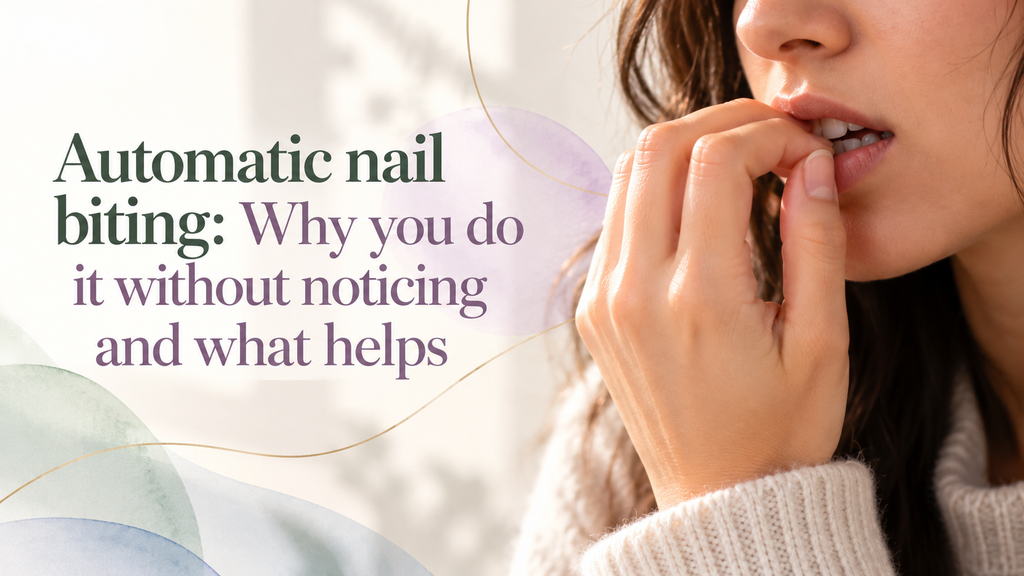
You’re halfway through an important meeting when you suddenly notice your fingers near your mouth. Another nail is bitten. You don’t even remember doing it. Sound familiar?
Automatic nail biting isn’t always about nervousness. Sometimes, your brain repeats a familiar action while your attention is occupied elsewhere. A stressful email, a rough nail edge, or even a quiet evening watching television can trigger the habit.
The frustrating part? You genuinely want to stop, yet your hands seem to act before you realise what’s happening. This behaviour, known as onychophagia, can become deeply ingrained. But recognising when and why it happens can help you interrupt the cycle.
In this guide, discover why automatic nail biting happens, practical ways to manage it, and how behavioural therapy and complementary hypnotherapy can support change.
How Common Is Nail Biting, and Is It a BFRB?
The medical term for chronic nail biting is onychophagia. Nail biting belongs to the body focused repetitive behaviours (BFRBs), a group that also includes skin picking, hair pulling and lip or cheek biting. That label is not a diagnosis for everyone who bites a nail. What matters is how often it happens, how much damage it causes and how much it affects your life.

Automatic vs Focused Nail Biting
Understanding the difference can help you identify a suitable response.
- Automatic nail biting: Happens when your attention is occupied elsewhere, such as during meetings, reading, scrolling or watching television. You may only notice the behaviour afterwards.
- Focused nail biting: Happens when you consciously respond to tension, a rough nail edge, an uncomfortable sensation or an urge to make the nail feel even.
Many people experience both patterns.
Why does this matter? Automatic biting often benefits from earlier awareness and environmental reminders, while focused biting may require strategies for managing urges, sensations or emotional discomfort.
Nail Biting Triggers: How to Find Yours
Your nail biting triggers are specific to you, so spend three days noticing them. Each time you catch yourself biting, jot down four things: where you were, what your hands were doing, what you were doing or watching, and what you felt just before.
You are looking for patterns, not perfect records. In Mumbai the usual suspects are easy to name: a packed local train, a long video call, a WhatsApp group that never stops, a traffic jam, a deadline week.
Treat this as problem-solving, not self-policing. Criticism and public reminders only add embarrassment and make it harder to talk honestly about what happens.
Four Steps to Recognise Your Nail Biting Patterns
For three days, try recording the following whenever you notice yourself biting your nails:
- Identify the situation: Were you working, traveling, watching television or using your phone?
- Notice your hand movements: Were your fingers already close to your mouth?
- Recognise the possible trigger: Was there a rough nail, boredom, concentration, tension or an uncomfortable sensation?
- Observe your emotional response: Did you feel anxious, frustrated, distracted or completely relaxed?
For example, you may notice nail biting during a crowded Mumbai local train journey, a long video call, a traffic jam or a demanding work deadline.
The purpose is not to monitor yourself constantly. It is to recognise patterns that may otherwise go unnoticed.
Remember: Awareness works better when approached with curiosity rather than criticism or embarrassment.
What Does Nail Biting Do to Your Nails and Skin?
Repeated nail biting can damage the nail plate, surrounding skin and nail-growing tissue. Over time, this may affect the appearance, comfort and health of your nails.
Possible physical consequences include:
- Soreness and irritation around the fingernails.
- Small cuts, bleeding or damaged cuticles.
- Changes in nail shape or growth.
- Increased risk of infections around damaged skin.
- Transfer of microorganisms between the hands and mouth.
The American Academy of Dermatology provides guidance on preventing nail damage, while the MSD Manual describes medical concerns associated with persistent nail biting.
How Can You Protect Your Nails?
Keep your nails short and smooth, clean your hands regularly and care for small cuts appropriately. Avoid pulling damaged skin or repeatedly checking rough nail edges, as these actions may become additional triggers.
If you notice increasing redness, swelling, pus or pain, seek medical advice rather than relying only on behavioural techniques.
Habit Reversal Training for Nail Biting
Habit reversal training is the best-supported behavioural approach for BFRBs. Psychology Today describes it as highly effective in the short term, with longer-term results usually best when it is combined with a cognitive-behavioural approach.
It has two parts. First you learn to catch the urge or the behaviour early. Then you practice a competing response: something safe that makes biting difficult.
- Clasp your hands or sit on them during meetings and screen time.
- Hold a stress ball, pen or fidget tool.
- Press your fingertips into your palm for a minute until the urge passes.
The response must be painless and usable wherever you bite. If it’s too noticeable in a meeting, adjust it. That isn’t failure, it’s part of the process.

Do Bitter Nail Polishes and Deterrents Work?
They can help, mostly for milder cases. Use products made for the purpose and follow the instructions. Avoid harsh or homemade substances meant to make biting painful. A deterrent does nothing about the urge itself, so it works best alongside awareness and a competing response.
Does Hypnotherapy Work for Nail Biting?
Hypnotherapy can be a promising complementary approach for managing automatic nail biting, particularly when the habit is associated with stress, emotional triggers, or deeply established behavioural patterns.
Drawing on nearly a decade of therapeutic experience supporting over 5,000 clients, Holistic Living Wellness Studio considers hypnotherapy a valuable approach to addressing unhealthy habits, including repetitive behaviours such as nail biting. Our practice-based observations suggest that hypnotherapy may help individuals recognise subconscious triggers, change automatic responses, and develop healthier behavioural patterns.
Rather than relying on willpower alone, hypnotherapy uses focused attention, relaxation, and therapeutic suggestions to support behavioural change. When combined with established techniques such as habit reversal training, it may provide additional support for managing persistent habits.
Although scientific evidence specifically supporting hypnotherapy for nail biting remains limited, our clinical experience informs a personalised, holistic approach to behavioural wellness. These practice-based observations are not equivalent to controlled clinical research.
At Holistic Living Wellness Studio, we focus on understanding individual challenges and supporting meaningful, sustainable behavioural improvements. Explore Hypnotherapy at Holistic Living Wellness Studio to learn how our approach may help you overcome unwanted habits.
Research, Therapeutic Experience and Practical Understanding

Research on body-focused repetitive behaviours supports behavioural interventions, particularly Habit Reversal Training (HRT), as an important treatment approach. These methods focus on recognising triggers, increasing behavioural awareness and developing alternative responses. Evidence specifically supporting hypnotherapy for nail biting is more limited, so it is best considered complementary rather than a proven standalone treatment.
Drawing on Sanjeev Mittal’s therapeutic experience in hypnotherapy and emotional wellness, three areas are particularly relevant:
- Recognising automatic patterns: Exploring when nail biting occurs and identifying situations, sensations or emotional experiences associated with the habit.
- Developing healthier responses: Encouraging relaxation, self-awareness and practical alternatives to repetitive biting.
- Supporting consistent behaviour change: Helping individuals establish realistic goals and recognise progress without depending entirely on willpower.
At Holistic Living Wellness Studio, personalised hypnotherapy and counselling may support individuals who wish to understand unwanted habits and develop greater emotional and behavioural awareness. Practitioner observations can inform supportive care, but they remain distinct from scientific evidence of treatment effectiveness. The goal is not simply to resist nail biting, but to recognise the habit earlier and develop healthier responses through appropriate support and consistent practice.
Nail Biting in Children and Teens
It is most common in this age group, so biting alone is not a reason to panic. The same ideas apply: look for the cue, offer a safe alternative for the hands, and keep nails trimmed.
Skip the scolding and the public reminders. Shame tends to drive the habit underground. If biting is causing damage, distress or social embarrassment, speak to a pediatrician or a child counsellor.
How Can Parents Help?
- Observe when the child tends to bite their nails.
- Keep nails trimmed and smooth.
- Encourage safe alternatives for the hands.
- Praise efforts rather than focusing only on mistakes.
- Avoid punishment, shaming or repeated public correction.
If nail biting causes bleeding, persistent damage, significant distress or difficulties at school or home, consider consulting a pediatrician or an appropriately qualified child mental health professional.
Is Nail Biting Related to ADHD, Anxiety or OCD?
Nail biting may occur alongside anxiety, attention difficulties or other repetitive behaviours. However, nail biting alone does not indicate ADHD, Obsessive-Compulsive Disorder (OCD) or an anxiety disorder.
Some people bite their nails when they feel anxious. Others do so during concentration, boredom or routine activities.
Possible contributing factors include:
- Stress or emotional tension.
- Boredom and under-stimulation.
- Sensory discomfort from rough nails.
- Habitual responses during concentration.
- Repetitive behaviour patterns.
If nail biting occurs alongside persistent anxiety, skin picking, hair pulling, significant attention difficulties or other concerning symptoms, a qualified professional can help assess the broader picture.
Avoid self-diagnosing based on one behaviour.
How to Stop Biting Your Nails at Work and at Home
Breaking a repetitive habit usually involves small, consistent changes rather than one dramatic decision.
Five Practical Steps to Reduce Nail Biting
- Start with one situation. Choose the setting where nail biting happens most often, such as during video calls or while watching television.
- Prepare an alternative response. Keep a suitable fidget object nearby or practice a comfortable hand position before the usual trigger appears.
- Reduce physical triggers. Trim rough nail edges and care for dry or damaged cuticles so they are less likely to invite biting.
- Create discreet reminders. A small note near your computer or an agreed private reminder may help you notice the habit earlier.
- Review your progress weekly. Focus on improvements in awareness, reduced biting and healthier nail condition rather than expecting immediate perfection.
For example, if you frequently bite your nails during long work calls, place a stress ball beside your laptop before the meeting begins. If the habit occurs during your commute, keep a practical alternative available. The easier your replacement behaviour is to use, the more likely you are to practice it consistently.
How Can You Tell Whether Nail Biting Treatment Is Working?
Progress does not always mean that nail biting stops completely within a few days.
Useful signs of improvement may include:
- Noticing the urge before biting begins.
- Experiencing fewer biting episodes.
- Seeing less damage around the nails.
- Using alternative responses more consistently.
- Feeling less embarrassed or distressed by the habit.
Some weeks may be more difficult than others, especially during stressful periods.
Instead of treating setbacks as failure, consider what changed. Was the usual alternative unavailable? Did your routine become more demanding? Did a new trigger appear? Use these observations to adjust your approach.
When Should You Seek Professional Help for Nail Biting?
Occasional nail biting may not require professional treatment. However, additional support can be useful when the behaviour causes persistent physical damage, emotional distress or difficulty managing everyday activities.
Consider seeking help when:
- Nail biting repeatedly causes bleeding or damaged skin.
- You experience pain, swelling, redness or possible infection.
- Attempts to reduce the behaviour have been unsuccessful.
- You feel significant embarrassment, anxiety or distress.
- Nail biting interferes with work, social situations or daily routines.
A doctor or dermatologist can assess physical nail and skin concerns.
A qualified mental health professional with relevant behavioural treatment experience can assess persistent repetitive behaviours and discuss appropriate interventions.
Hypnotherapy or general counselling may offer complementary support where suitable, but they should not delay necessary medical care or evidence-based behavioural treatment.
Common Misconceptions and Important Considerations
Myth 1: Nail biting always means someone has anxiety.
Fact: Nail biting can occur during stress, but it may also happen during boredom, concentration or relaxation. The behaviour alone cannot establish whether someone has an anxiety disorder. Understanding the circumstances surrounding the habit is more useful than assuming a single psychological cause.
Myth 2: People bite their nails because they lack willpower.
Fact: Repetitive habits can become automatic through repeated associations between situations, sensations and actions. Someone may genuinely want to stop yet find themselves biting before becoming aware of it. Behavioural approaches focus on increasing awareness and practicing alternatives rather than blaming the individual.
Myth 3: Children will always outgrow nail biting.
Fact: Some children gradually reduce nail biting as they grow older, while others continue into adulthood. The appropriate response depends on the frequency, physical consequences and emotional impact. Persistent damage or distress deserves attention rather than assuming the behaviour will disappear on its own.
Myth 4: Hypnotherapy alone can permanently cure nail biting.
Fact: Evidence specifically supporting hypnotherapy for nail biting is limited, and no responsible practitioner should guarantee permanent results. Habit reversal training and other appropriate behavioural approaches have stronger supporting evidence. Complementary techniques may be explored according to individual needs without replacing established care.
Important consideration: Nail biting can have behavioural, sensory, emotional and environmental influences. Effective support should consider the individual’s actual experiences rather than assuming that every habit reflects hidden trauma or unresolved subconscious conflict.

FAQs
1. Why do I bite my nails without noticing?
Your hands may follow familiar routines while you’re reading, scrolling, or thinking deeply. These small actions can happen before you consciously recognise them. Paying attention to everyday situations where nail biting occurs can reveal subtle patterns that might otherwise remain unnoticed.
2. Is nail biting a sign of anxiety?
Not necessarily. Some people bite their nails even when they feel completely relaxed. The behaviour may become associated with certain activities or situations rather than emotional distress. Holistic Living experts recommend looking at the broader behavioural pattern instead of assuming every repetitive habit indicates anxiety.
3. What is habit reversal training?
Habit reversal training helps you respond differently to an unwanted behaviour without depending entirely on self-control. It involves recognising early warning signs and practicing an alternative action. With regular practice, these techniques can help individuals gradually reduce automatic responses and develop greater control over repetitive habits.
4. Does hypnotherapy work for nail biting?
Hypnotherapy explores relaxation, focused attention, and suggestions intended to support behavioural change. Although research on its effectiveness for nail biting remains limited, some individuals consider it alongside established treatments. At Holistic Living Wellness Studio, the emphasis is on understanding individual experiences and exploring appropriate therapeutic support.
5. When should I see a doctor about bitten nails?
Consider medical advice when damaged nails interfere with everyday activities, repeatedly fail to heal, or show signs of infection. Persistent nail biting that causes emotional distress may also warrant psychological support. Addressing physical concerns and behavioural difficulties separately can help ensure appropriate care.
6. Is nail biting normal in children?
Nail biting is relatively common during childhood and may gradually decrease as children grow older. Rather than repeatedly correcting the behaviour, parents can encourage open conversations and positive reinforcement. As suggested by our experts, a patient, supportive approach can help children feel more comfortable discussing their habits.
Conclusion
Automatic nail biting can feel frustrating, especially when you notice the behaviour only after it has happened. But recognising triggers, practicing alternative responses and seeking appropriate support can make the habit easier to manage over time.
At Holistic Living Wellness Studio, our personalised approach to hypnotherapy and counselling focuses on understanding individual experiences, exploring emotional triggers where relevant and supporting healthier behavioural awareness. We recognise that not every nail-biting habit has a psychological cause, and that established behavioural or medical treatment may be appropriate.
At our Bandra and Chembur centres in Mumbai, we help you take that first step with confidence. Your journey towards healthier habits can begin with one conversation. Explore our free 10-minute consultation.
Written by Editor HL Library Team
Reviewed by Sanjeev Mittal, author, Certified Relationship Coach, Clinical Hypnotherapist and Family Counsellor.
